FinOps strategy development and execution
“FinOps is an operational framework and cultural practice which maximizes the business value of cloud, enables timely data-driven decision making, and creates financial accountability through collaboration between engineering, finance, and business teams.” (FinOps Foundation)
FinOps is an operational framework and cultural practice that, through collaboration among engineering, finance, and business teams, enables timely data‑driven decision‑making, establishes financial transparency and accountability, and maximizes the value of cloud business.
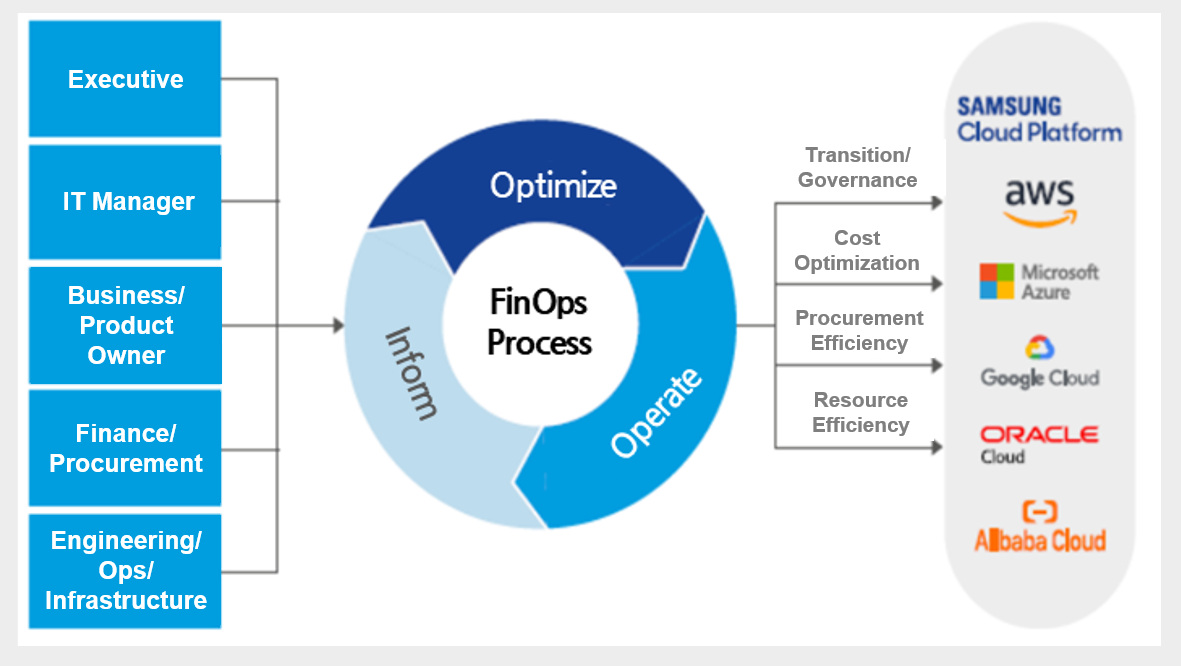
Establish cost optimization process
The FinOps Framework presented by the FinOps Foundation outlines the principles, domains, capabilities, stakeholders, and stages for cost optimization as shown in the figure below.
To understand the core concepts and processes of cloud cost optimization, let’s examine the elements of the FinOps Framework.
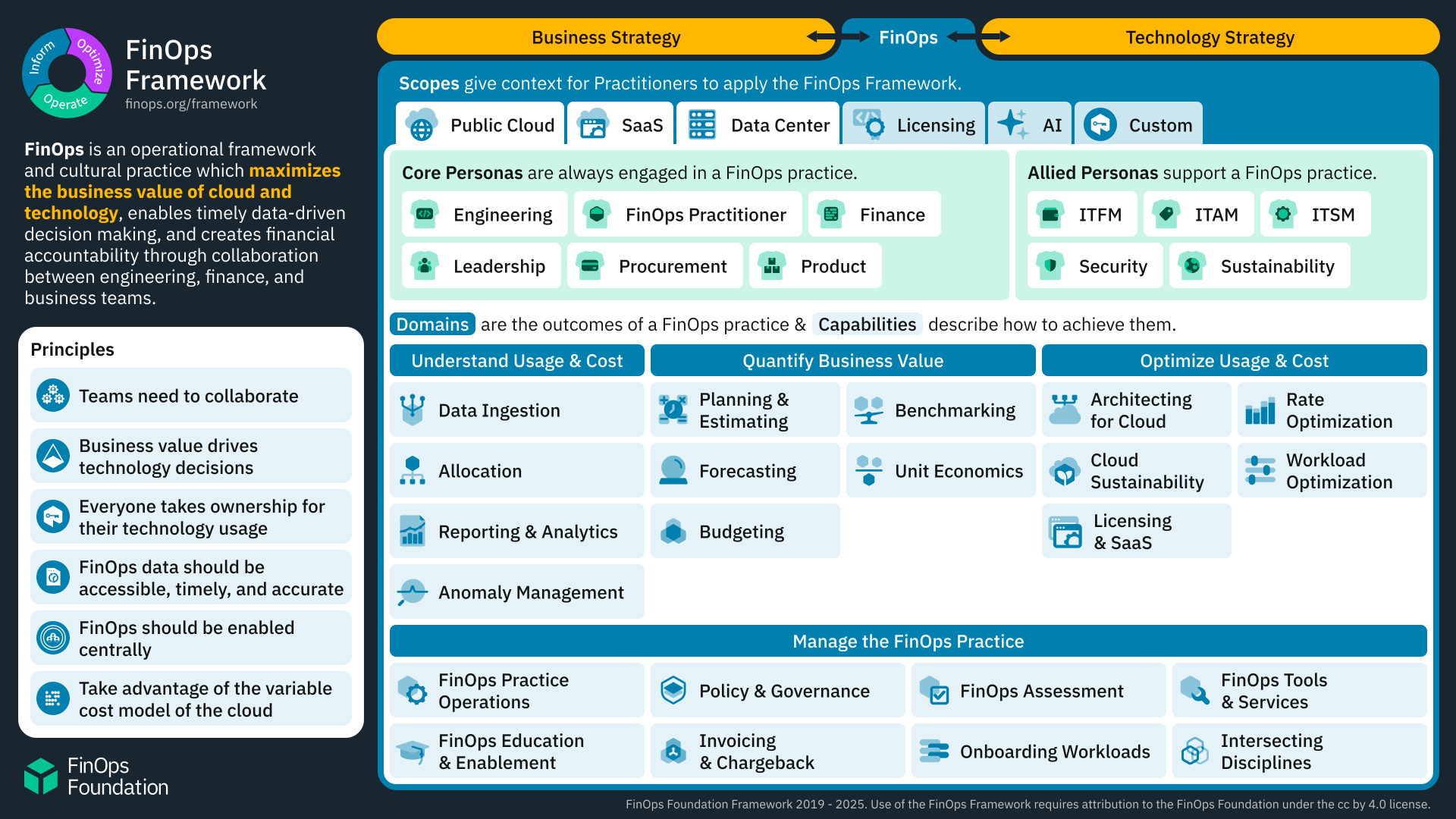
FinOps Framework: Principles(Principles)
The principles presented by the FinOps Framework are as follows.
Team Collaboration
Since the cloud incurs costs per resource and per hour, finance, engineers, product/service, and business teams must collaborate continuously. Each team continuously collaborates to improve efficiency and drive innovation.
Decision-making based on the business value of the cloud
Unit economic efficiency and metrics better reflect their impact on the business than total spending. Consider trade-offs among cost, quality, and speed. I consider the cloud to be a driving force for innovation.
Assign responsibility for cloud usage to all entities
Responsibility for usage and cost extends to lower-level organizations or business units, and engineers are accountable for costs from architecture design through current operations. Each functional team and product team manages cloud usage within their department’s budget limits. Distribute decision-making on cost‑effective architecture, resource utilization, and optimization to each department. The technical team should consider cost as a new efficiency metric from the early stages of the software development lifecycle.
Real-time viewable FinOps Data
Cost data is processed and shared immediately upon creation. Ensuring real-time data visibility increases cloud utilization. Rapid, continuous feedback on data contributes to generating efficient results. Information about cloud spending costs is provided to all departments of the organization in real time. Generate, monitor, and improve real-time financial forecasts and plans. We conduct trend and variance analysis to understand the causes of cost increases. We promote best practices and celebrate achievements through internal team benchmarking. We evaluate our performance by benchmarking against peer organizations in the industry.
FinOps led by dedicated team
While each department holds responsibility for its own area, the dedicated team plays a role in recommending, disseminating, and supporting best practices. The executive team supports FinOps and its practices and processes. We integrate management of fees, contracts, and discount optimization to leverage economies of scale. Engineers and the operations team focus on optimizing usage in their respective environments and do not get involved in discount negotiations.
Utilizing the cloud’s variable cost model
I view the cloud’s variable cost model as an opportunity to provide greater value rather than a risk. We predict, plan, and purchase capacity just-in-time when needed. We establish agile iterative plans rather than static long‑term plans. Do not let irregular pushes cause you to tidy the system; achieve cloud optimization through proactive system design and continuous adjustments.
FinOps Framework: Stakeholder(Persona)
To implement FinOps, various stakeholders within the organization, i.e., personas, must work together with the FinOps team.
FinOps activities are not performed only by the FinOps team.
Everyone involved in the use, tracking, management, or direction of cloud utilization is a FinOps stakeholder, and through collaboration within the FinOps Framework, each gains benefits.
The following table shows the core FinOps stakeholders, associated organizations, and their roles.
| FinOps entity | role | Subject classification |
|---|---|---|
| FinOps practice |
| Core |
| Management |
| Core |
| Product/Service |
| Core |
| Engineer |
| Core |
| Finance |
| Core |
| Purchase |
| Core |
| ITSM / ITIL |
| Related organization |
| ITAM |
| Related organization |
| Sustainable Management (ESG) |
| Related organization |
| Security |
| Related organization |
| ITFM |
| Related organization |
FinOps Framework: Phase (Phase)
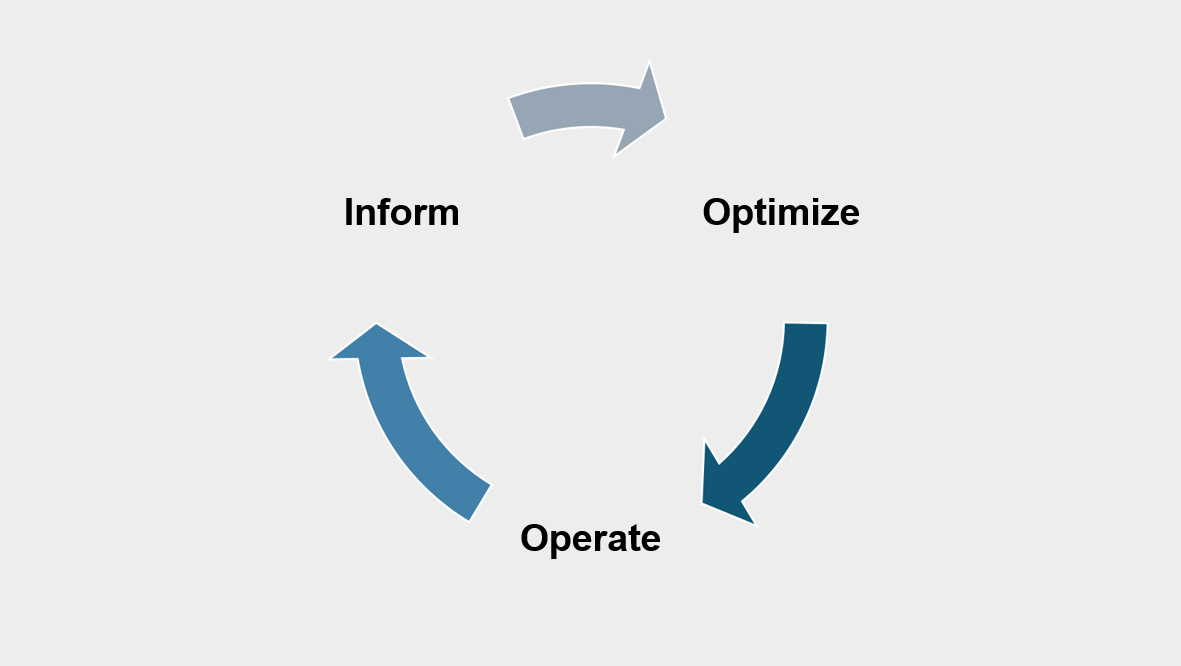
FinOps performs framework tasks by repeatedly executing the three stages of Inform(notification), Optimize(optimization), and Operate(operation).
Inform: Visibility and Allocation
In the Inform stage, activities are performed to collect and analyze data on cloud costs, usage, and efficiency.
In this stage, the tasks include identifying data sources, allocating and analyzing data, and then preparing a report.
Through this, each team can gain the capability to develop metrics that enable budgeting, trend forecasting, KPI establishment, and explaining the business value of cloud spending.
By accurately allocating cloud spend according to tags, users, or business rules, precise reporting becomes possible, and the business and finance teams can increase ROI within budget while forecasting spend and carbon costs.
Cross-team benchmarking provides a useful metric for evaluating an organization’s operational efficiency.
Additionally, by linking cloud cost data with sustainability, efficiency, utilization, and performance benchmarks, you can derive key performance indicators (KPI) and unit metrics for the organization’s cloud usage.
The cloud offers on-demand access, elasticity, and various pricing discounts, and organizations must build a data‑driven decision‑making framework on this foundation, monitor spending in real time, and continuously communicate business objectives to each department.
Optimize: Pricing and Usage
In the Optimize stage, opportunities to improve cloud efficiency are identified by leveraging the data and capabilities gathered during the Inform stage.
In this stage, you use the resource optimization tools provided by the cloud provider to adjust underutilized resources to appropriate sizes, apply the latest architecture, manage workloads, and eliminate unnecessary resource waste.
Additionally, visibility, analysis, and reporting features for strengthening the purchase and management of pricing models such as contract discounts and Cost Savings are also included.
In this stage, areas where cloud performance does not align with the organization’s value goals are identified, and cross‑team collaboration is carried out to optimize reporting and management processes based on unit metrics.
Conflicts may arise between optimization directions, but the ultimate goal is for the organization to generate greater value through cloud investment.
Operate: continuous improvement and usage
In the Operate stage, we implement changes to embed FinOps within the organization based on the data and capabilities secured during the Inform and Optimize stages.
This stage includes establishing cloud governance policies, monitoring compliance, developing training programs aligned with organizational goals, establishing team guidelines and automation policies, and granting individual permissions.
For FinOps to succeed, engineering, finance, and business teams must collaboratively take continuous, incremental actions based on the data generated in the Inform stage.
Additionally, you must select the optimal opportunities identified in the Optimize phase and build a culture of accountability for the actions implemented across the organization.
In the Operate stage, we set goals to repeatedly develop strategies and improve workflows, and when necessary, return to the Inform and Optimize stages to mature activities and introduce new capabilities.
Through this, you can continuously improve the organization’s FinOps operations.
FinOps domain and activities
The domains of the FinOps Framework are the fundamental business outcomes that an organization must achieve through FinOps, and FinOps activities refer to the tasks performed within each domain.
The first domain is about understanding cloud usage and costs.
In this area, we collect and analyze cost-related data, detect anomalies, and manage them.
| activity | Explanation |
|---|---|
| Data Collection Data Ingestion | Collects, transmits, stores, and normalizes data from various sources to create a context‑based dataset that enables comprehensive analysis of cloud usage and costs. |
| Allocation Allocation | Allocate cloud costs to teams and projects within the organization and assign responsibility using users, tags, labels, and other metadata. |
| Report and Analysis Reporting & Analytics | Analyze cloud data and generate reports to gain insights into usage and spending patterns, identify improvement opportunities, and support decision-making based on cloud resource information. |
| Anomaly Management Anomaly Management | Detect, identify, alert, and manage unexpected or unpredictable cloud cost and usage irregularities in a timely manner to reduce cost risk in cloud operations. |
The next domain is business value quantification.
In this area, we quantify the potential costs and value of the business and conduct activities that analyze economic feasibility through benchmarking.
| activity | Explanation |
|---|---|
| Planning & Estimating Planning & Estimating | Estimate and explore the potential cost and value of workloads when implementing a specific model or models in an organization’s cloud environment. |
| Prediction Forecasting | Creates a model of the expected future cost and value of a cloud system by leveraging statistical methods, past spending patterns, planned changes, and related metrics. |
| Budget Budgeting | A strategic and continuous process of setting limits aligned with business objectives, monitoring and managing cloud expenditures, to ensure accountability and predictable financial outcomes for cloud-based systems. |
| Benchmarking Benchmarking | Using efficiency metrics to evaluate value by comparing cloud optimization across departments within the organization or with peer companies in the same industry, informing decision-making and aligning FinOps with business objectives. |
| Unit Economics Unit Economics | Develop and track metrics that enable understanding of how the organization’s cloud usage and cloud management practices affect the value of its products, services, or activities. |
The third is the domain of cloud usage and cost optimization.
In this area, we measure the usage of the cloud workloads being performed and develop and implement strategies to optimize costs.
| activity | Explanation |
|---|---|
| Cloud Architecture Design Architecting for Cloud | Design and modernize solutions with cost awareness and efficiency to maximize business value while achieving performance, scalability, and operational goals. |
| Rate Optimization Rate Optimization | Through contracts, Cost Savings, etc., increase cloud cost efficiency to achieve the organization’s operational and budget goals. |
| Workload Optimization Workload Optimization | Analyzes and optimizes cloud resources to fit specific usage patterns, while ensuring workloads operate efficiently and deliver sufficient business value relative to cost. |
| Cloud Sustainability Cloud Sustainability | Integrate sustainability criteria and metrics into cloud optimization so that environmental efficiency balances financial value and cloud optimization decisions align with organizational goals. |
| Licensing & SaaS Licensing & SaaS | Understand vendor-specific licensing terms, usage rights, and pricing options, and plan appropriate usage while avoiding over- or under-licensing. Understand and optimize the impact of SaaS adoption on the organization’s cloud cost structure and value. |
The last is FinOps Execution Management.
We establish a culture and organization that execute cloud strategy within the organization through FinOps strategies and processes.
| activity | Explanation |
|---|---|
| FinOps Execution Operations FinOps Practice Operations | By continuously implementing FinOps strategies and processes, we operate an effective FinOps team that strengthens FinOps practices and fosters a culture of responsibility. |
| Cloud Policy & Governance Cloud Policy & Governance | Establish and evolve policies, controls, and governance mechanisms to ensure cloud usage aligns with business objectives, complies with regulatory requirements, and efficiently optimizes cloud resources. |
| FinOps Assessment FinOps Assessment | Repeatedly measure and analyze FinOps maturity within the context of the FinOps framework to gain insights into the strengths and improvement areas of FinOps activities. |
| FinOps Tools & Services FinOps Tools & Services | Developed criteria and methodology for strengthening FinOps use cases by effectively integrating FinOps tools and services that align with framework capabilities. |
| FinOps Education FinOps Education & Enablement | Through education, technology development, and practical activities, teams across the entire organization can adopt and deliver FinOps use cases. |
| Settlement Management Invoicing & Chargeback | By collaborating with the product/service and engineering teams, the finance team develops a cloud settlement model and adjusts cloud cost data and reports to meet budgeting and accounting requirements. |
| Workload Transition Onboarding Workloads | Coordinate system migrations between cloud environments—or within a cloud environment—in a way that provides transparency on cost, usage, and impact, and supports operational objectives. |
| Interdepartmental collaboration Intersecting Disciplines | Coordinate activities with related departments (ITAM, ITFM, sustainability, security, etc.) to manage responsibilities that extend beyond cloud and integrate them into the organization’s cloud strategy through collaboration with FinOps. |
FinOps maturity
FinOps activities are performed repeatedly, and through this, the maturity of processes, domains, and activities improves.
The FinOps maturity approach starts small and gradually expands in scale, scope, and complexity.
By taking swift, necessary actions within a small, limited scope and performing FinOps, you can later expand FinOps activities in a larger, faster, and more granular manner based on the results of those actions.
The table below shows the maturity of FinOps.
| Maturity | Characteristic | KPI example |
|---|---|---|
| Crawl |
|
|
| Walk |
|
|
| Run |
|
|
Cost Requirements Analysis
Based on the FinOps execution stages examined earlier, tasks related to cost requirements can be derived.
The ultimate goal is to reduce total costs through cost optimization, but tasks and task objectives can be set for each implementation phase to achieve this.
The following outlines the requirements for each execution stage.
Inform stage
| Requirements | Explanation |
|---|---|
| Map expense data to the business. | Connect expense data to the organizational structure to meet the analysis needs of finance, business, and engineering teams. |
| Showback and Chargeback Management | Assign expense responsibility to each department and connect it to the internal system. |
| Budget and forecasted cost confirmation | You must be able to use available data to predict cloud usage across multiple projects and control the budget. |
| Establishing Tag Rules and Compliance Measures | To prevent arbitrary tagging, quickly establish tag rules and apply them to resources. |
| Allocate shared costs fairly. | Allocate the costs of services or support services shared by each team in appropriate proportions. |
| Dynamic calculation of custom rates/depreciation costs | Agreements and discounts must be reflected in all cost data. |
| Trend and deviation analysis | To identify the reasons for expenditures, costs must be viewable from the time and resource levels up to the project level. |
| Drafting evaluation forms and benchmarking | Developed an evaluation rubric to benchmark project teams in terms of cost, speed, and quality optimization. |
Table. FinOps stage-by-stage cost requirement analysis - Inform stage |
Optimize stage
| Requirements | Explanation |
|---|---|
| Check for abnormal signs | It must be able to verify cost thresholds and detect abnormal usage spikes. |
| Identify and report low-usage services | It should be able to identify resources that are unused or have low utilization. |
| Contract VM Central Management | Review the organization’s entire cloud portfolio and manage centrally to enhance the effectiveness of committed discounts. |
| Comparison of pricing and workload placement | Review infrastructure requirements to enable cost savings on cloud expenses through workload placement. |
Table. FinOps stage-specific cost requirement analysis - Optimize stage |
Operate phase
| Requirements | Explanation |
|---|---|
| Provide expense data to stakeholders | Provide periodic cost data so that all departments can understand cloud spending. Automate to enable report creation and utilization. |
| Cultural change aligned with the goal | You can receive training and authority to understand, explain, and collaborate with multiple teams to drive innovation. |
| Appropriate-sized server type | The engineer applies the recommendations derived in the Optimize phase. |
| Cloud usage governance and control | Continuously evaluate the agreed criteria for which type of cloud service to use. |
| Continuously improve efficiency and innovation | Driving a process that continuously and repeatedly improves purpose and goals to achieve better business performance. |
| Resource Optimization Automation | A well-trained team provides a feature that programmatically detects required changes for incorrect resource sizes and automatically cleans up underutilized resources. |
| Integrate recommendations into the workflow | Application owners are not required to log in each time to check recommendations; instead, they can view them through the FinOps management tool. |
| Policy-based tag cleanup, storage modification cycle policy | Organize tags using tag policies. Create a policy-based storage lifecycle to automatically store data in low‑cost storage. |
Showback It is the process by which an organization tracks cloud costs and delivers them to internal departments or business units. It is used to provide transparency and increase awareness of how many resources or services are being consumed across various departments, even without actually charging costs.
Chargeback It is the process of allocating and billing actual cloud costs to the respective internal department or business unit. Issue cloud cost invoices for departmental consumption based on pre‑determined rates or cost models.
Cost Modeling
In an on-premises environment, demand is forecasted, and fixed costs are allocated in the early stages to build the information system.
In contrast, in a cloud environment, resource costs are incurred based on actual demand, and the costs can vary on a monthly, daily, or hourly basis.
Therefore, using the cloud improves efficiency and agility, but the variability in cost and usage also increases.
When customer demand increases, resources also expand, leading to higher costs, but if efficiency improves, the cost increase can be reduced.
The cloud’s flexible nature also affects cost and forecasting.
Develop plans that reflect changing business requirements and demand, and incorporate this volatility into the existing organization’s budgeting process.
To forecast the cost of a new workload, cost modeling should be taken into account.
Cost modeling is the process of setting goals with FinOps stakeholders through financial analysis based on an understanding of cloud costs, and identifying cost‑optimization opportunities.
Methods for assessing volatility for forecasting include Business Practice and Data Analytics approaches, and the items to be reviewed for each approach are as follows.
Business Practice Approach
- Identify periods of periodic user increase such as peak seasons and holidays.
- Future plans that can increase users, such as projects and marketing events
- Data collection cycle for forecasting
Data Analytics approach
- Verify whether past data reflecting periodic user growth is incorporated
- Verify whether past data is reflected in the business event
- Gap analysis between predicted and actual results
- Long-term trend forecast
Next, we need to segment the data to define the cost.
The level of granularity can vary depending on the organization’s structure and internal processes, as well as specific requirements and The granularity level is determined according to the organization’s circumstances.
Using this, you can conduct cost modeling based on the following example.
Group all expenses according to the classification criteria.
Calculate the average spending for the past three months by group.
- Calculate the average value of the same period one year ago.
Compare the two averages to identify the trend and apply the growth rate to each group.
Reflect all future plans.
Share with the FinOps stakeholders and coordinate feedback.
CiO-based cost management
CiO is Samsung SDS’s collaboration platform to support FinOps processes.
This platform supports real-time information sharing, inter‑team communication/collaboration, and immediate execution.
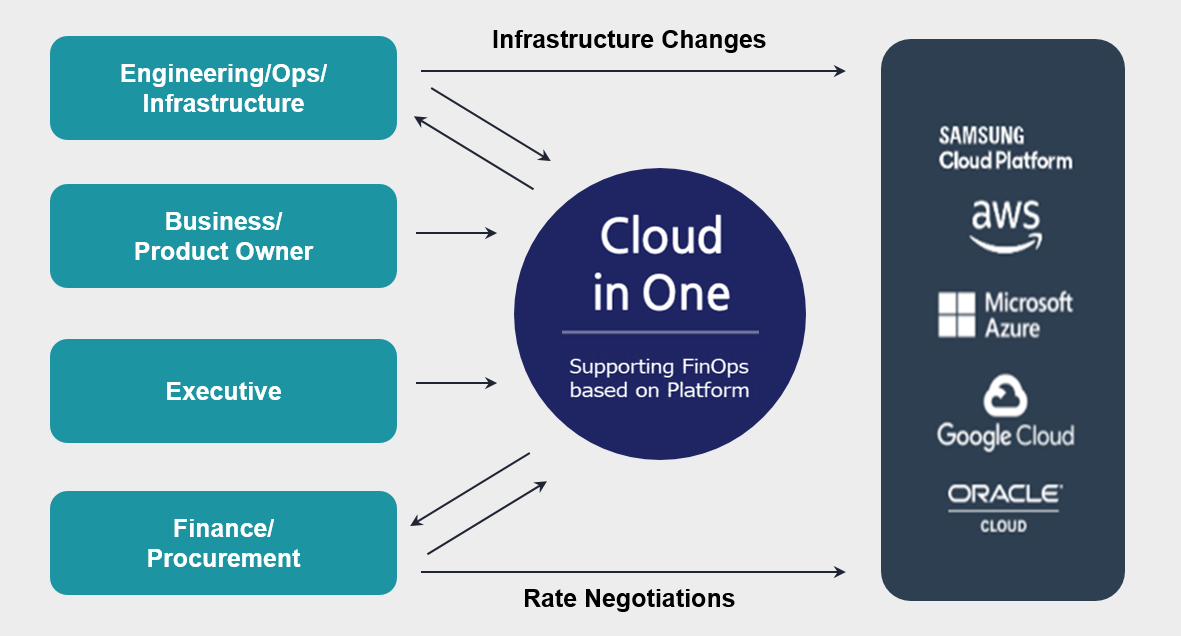
Enterprise-wide platform for establishing FinOps Providing information, execution guides, and processes for Hybrid, Multi-Cloud deployment/operation.
Activating collaboration through real-time cloud information sharing and communication Verify the purpose, method, and scale of resource usage. Verify how much effort the development/operations department is putting into resource optimization. Check how much cloud costs are being reduced at the enterprise level.
Providing platform value for cost discount and resource optimization Usage pattern-based fee discount and resource optimization recommendation/execution (Short-term) Additional profit sharing (Long-term) of the Enterprise Discount Program through integrated resource management
Providing FinOps standard processes and continuously updating based on execution Traditional resource management process → Establishing an optimal collaboration process for cloud environments
CiO provides concrete execution strategies and collaboration platforms to advance FinOps to the ‘execution’ stage.
Providing only actual usage and cost information presents many challenges in executing FinOps.
Accordingly, CiO defines management metrics and processes for performing FinOps and supports their execution.
| question | Explanation |
|---|---|
| How effectively are resources being used? |
|
| How well are you implementing resource optimization? |
|
| How aggressively have you configured cost efficiency? |
|
| How well are we executing cost efficiency? |
|
Through FinOps management metrics, you can intuitively and quantitatively understand the status of cloud resources and cost management.
The results of each metric item are linked to improvement activities, enabling continuous governance execution.
It is necessary to define the management level based on the organization’s current status and to systematically carry out change management.
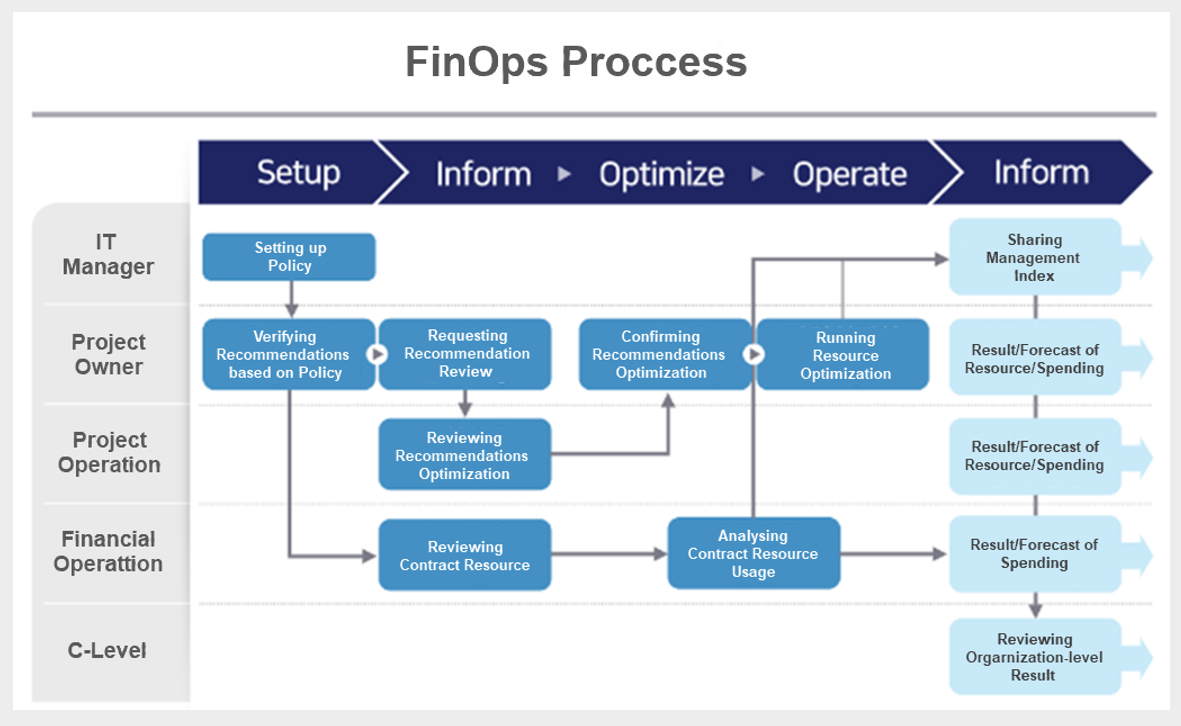
For efficient decision-making, a collaborative process among FinOps participants is essential.
The above diagram shows the process established by applying FinOps’s basic process of Inform → Optimize → Operate.
To ensure that the process defined in this way can be continuously executed and managed, systematic systematization is required.
The CiO of Samsung Cloud Platform is one of Samsung SDS’s Managed Service offerings, and for more details, please refer to Samsung SDS Cloud in One.